
Tech stack
Project breakdown
HCLib - Full-stack Library Management System
Loan management · Rich catalog relations · Staff access control
Role: Solo developer across frontend and backend. I designed the architecture and implemented the circulation, catalog, and authentication flows end to end.
Next.js 15 · React 19 · TypeScript · NestJS 11 · TypeORM · PostgreSQL · Redis · Docker Compose
HCLib is a library operations system built for day-to-day staff workflows. The hardest part was keeping loan state, inventory updates, and catalog data consistent while still making the admin UI fast enough to use at the desk.
System Architecture
The frontend is organized feature-first so staff workflows remain easy to iterate. The backend is domain-centric so transaction boundaries, validation, and state transitions stay inside the correct service layer.
Loan Lifecycle Management
Problem: Real library circulation is not a single record with a due date. Each loan can include multiple copies, each copy has its own condition and return flow, and invalid transitions can quickly corrupt inventory.
Solution: Treat circulation as a domain workflow instead of a simple CRUD form.
Implementation highlights:
- One loan form handles member selection, staff selection, multiple copies, due date, and loan conditions
- Validation errors from nested array fields are mapped back into the matching React Hook Form path
- Loan creation runs inside a transaction and atomically updates copy state from
AVAILABLEtoBORROWED - Return flows support damaged books, fines, renewals, and separate item-level transitions
Result: The system prevents double-loans, invalid returns, and broken inventory counts while still keeping the desk-side UI fast enough for operators.

Catalog Management with Complex Relations
Problem: Adding a book requires much more than inserting one database row. A valid catalog record needs publisher data, multiple authors with role/order, categories, cover uploads, and uniqueness checks such as ISBN.
Solution: Build catalog creation as a composed workflow: upload first, validate relations inside a transaction, then persist book and relation tables together.
Implementation highlights:
- A multi-block form separates basic data, metadata, relations, and cover upload
- Author selection supports debounced search, multi-select, role assignment, and ordering
- Cover upload happens before submit so the book endpoint stays focused on business validation
- Backend services validate ISBN uniqueness and relation existence inside one transaction
Result: The form stays usable even though the domain is dense, and the backend remains strict about consistency.

CI/CD & Deploy
- Frontend build, backend Jest, and container health checks are part of the pipeline
docker-composeis used for local development and image-based production deploys- The deployment topology keeps the frontend app and backend API isolated behind a reverse proxy
Key screens
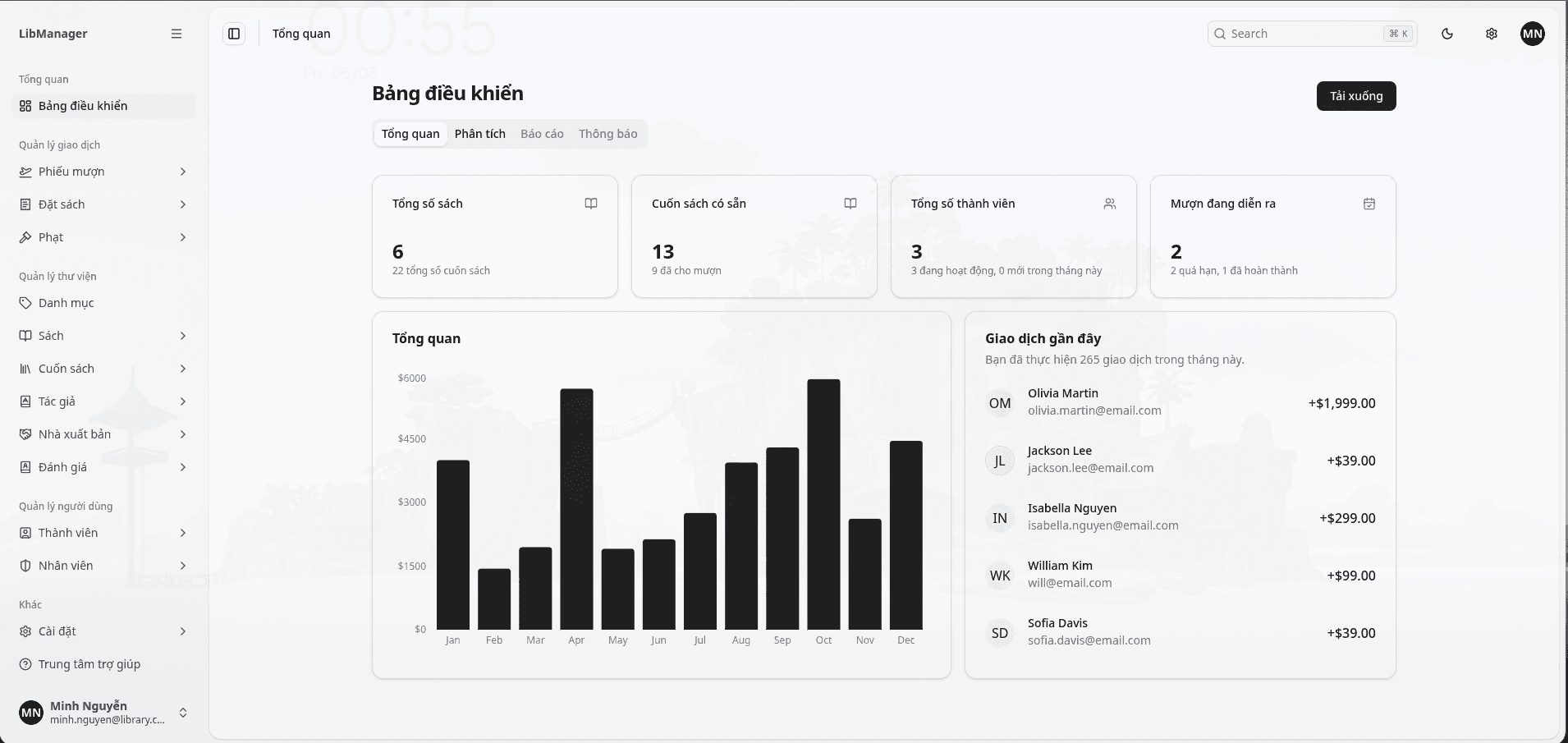
Loan Management
Staff-facing circulation dashboard for creating loans, tracking copy state, and processing returns.
Book Reservations
Reservation flow for readers to place holds and follow reservation status.
Fine Management
Flow for recording and reviewing fines tied to overdue, damaged, or lost books.
Book Catalog
Catalog management for book records, copy data, and related metadata.
Member Management
Member administration for profile data, account status, and related actions.